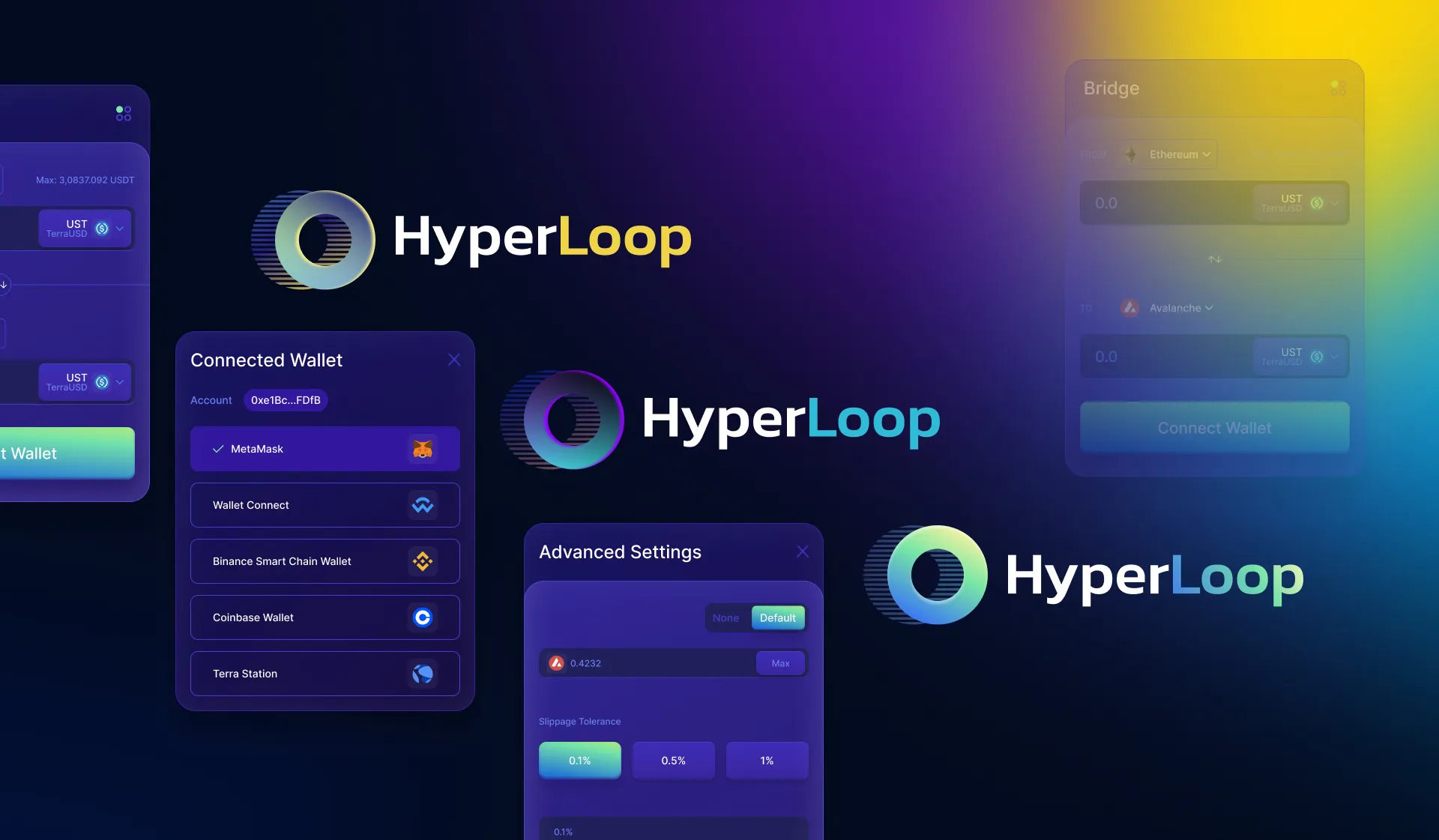
Hyperloop — Cross-Chain Token Bridge for DeFi
Managing the design of a cross-chain bridge application from mood boards and concept exploration through interactive prototype to polished final screens.
What needed solving
Moving tokens across blockchain networks was fragmented, confusing, and risky for users. Hyperloop needed a cross-chain bridge interface that made bridging tokens between networks like Ethereum and Avalanche feel as straightforward as a simple transfer — while handling wallet connections, network selection, token approvals, multi-token bridging, and error states like insufficient funds. The challenge was turning a deeply technical DeFi operation into an experience that inspired confidence.
Rules I worked within
Must support multi-network bridging (Ethereum, Avalanche, and more) with clear source and destination selection.
Wallet connection flow had to accommodate MetaMask and multiple wallet providers without overwhelming the user.
Transaction approval and pending states needed to communicate progress clearly to reduce user anxiety during bridging.
Design had to go from mood board through multiple concept rounds to final screens — managing iteration cycles across the team.
Measurable outcomes
Delivered 11 polished desktop screens — landing page, wallet connection, bridge token, multi-token bridge, approving, insufficient funds, settings, dropdowns, and connected states.
Managed delivery of a 17-screen interactive prototype covering the full user journey from landing to completed bridge transaction.
Coordinated three design phases — mood board and research, concept exploration with multiple directions, and final polished deliverables.
Delivered the complete bridging experience — network selection, token selection, amount entry, approval flow, error handling, and settings.
“In DeFi, the interface is the trust layer — users cannot see the smart contract, so every visual cue during a bridge transaction must communicate safety and progress.”